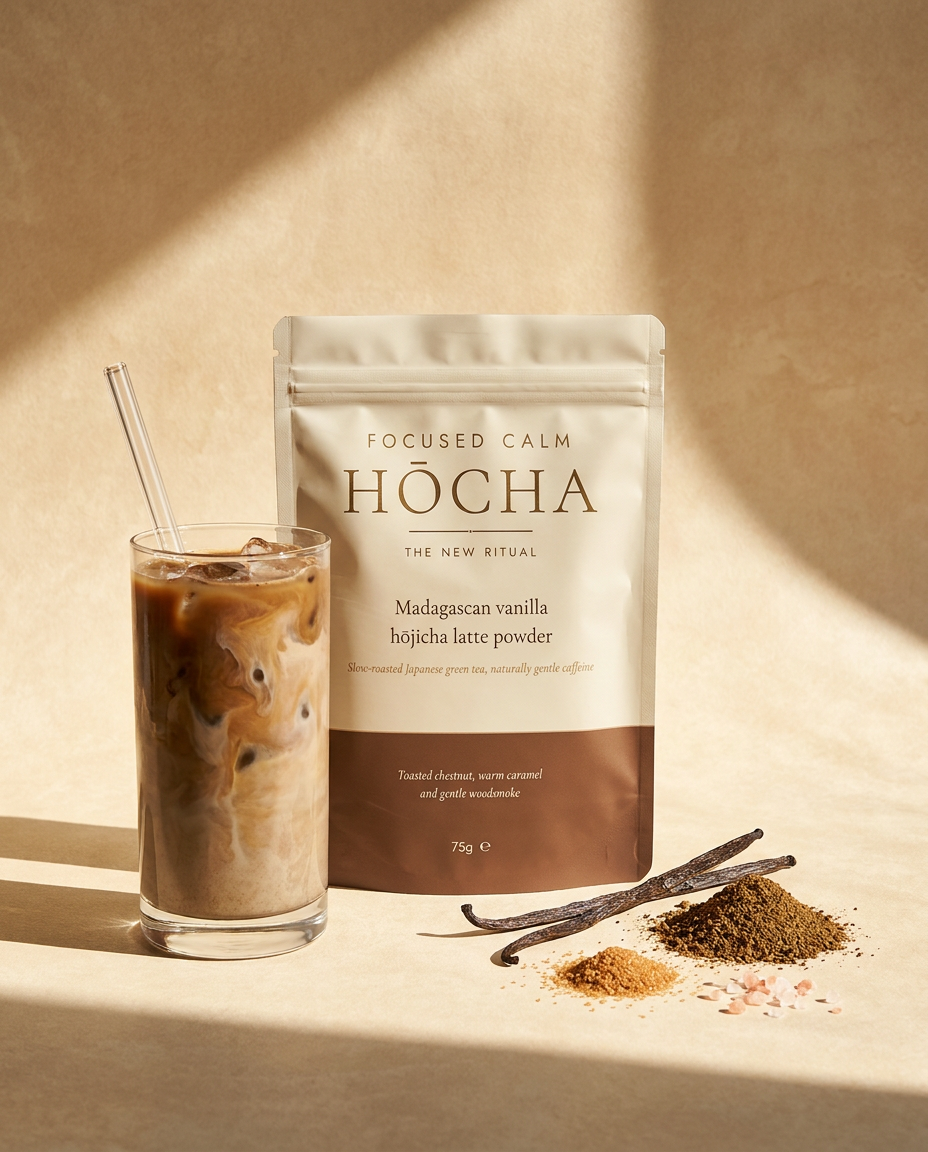
Short answer: a Hōcha hōjicha latte contains about 20mg of caffeine per cup. That's roughly a fifth of a coffee, around a third of a matcha latte, and low enough that most people can comfortably drink it in the evening.
That number isn't an estimate we found on the internet. It's measured for our blend, per 2.5g serving, and printed on the back of every pouch — right under the nutrition table. (Prefer a double-strength serve? That's still only ~40mg — about half a matcha latte.) We think precision matters in a category that mostly says "low caffeine" and hopes you won't ask.
How that compares
| Drink | Caffeine per cup | Evening-safe? |
|---|---|---|
| Filter coffee | ~95mg | No |
| Latte (single shot) | ~80mg | No |
| Matcha latte | ~60–70mg | Risky |
| Black tea | ~40–50mg | Depends |
| Green tea (sencha) | ~30–40mg | Depends |
| Hōcha hōjicha latte | ~20mg | Yes |
| Decaf coffee | ~2–5mg | Yes |
Weighing up the two green teas? We've compared them properly — taste, caffeine, calm — in hōjicha vs matcha: which one is right for you?
Why is hōjicha so low in caffeine?
Two reasons, both built into how it's made.
The leaves. Hōjicha is traditionally made from later-harvest leaves and stems — parts of the tea plant that are naturally lower in caffeine than the young shade-grown leaves used for matcha.
The toasting. The leaves are slow-toasted at high heat until they turn amber. That process — the same one that creates hōjicha's caramel, chestnut and woodsmoke character — also degrades a good portion of the remaining caffeine. The flavour transformation and the calm are the same chemistry.
What ~20mg actually feels like
Practically: very little, and that's the point. Twenty milligrams is around a quarter of a single espresso shot — below the level where most people notice any real stimulant effect. There's no lift, no edge, and crucially no crash — because there was never a spike to come down from. What you get instead is the ritual: a warm (or iced) cup, something honeyed and grounding in your hands, and the signal to your body that this is a pause.
If you're used to coffee's wired-then-tired arc, the strangest part of switching is the absence — 2pm arrives and nothing falls off a cliff.
Who is this actually for?
The ~20mg number matters most if you're caffeine-sensitive or anxious and coffee has started to feel like a bad trade; if you're pregnant or limiting caffeine and want a proper café-style ritual that fits comfortably inside the guidance you've been given (worth checking with your midwife or GP for your situation); if you love an evening hot drink but hate the 1am ceiling-stare; or if you're already several coffees deep and want the next cup to be a kindness instead.
One honest note: we make a low-caffeine latte, not medical advice. If caffeine and your health are tangled together right now, your GP knows your situation better than a tea brand does.
The cup that ends the day instead of starting it
Hōcha is Kagoshima hōjicha, ground to a fine powder and softened with Madagascan vanilla — ~20mg of caffeine, ~8 calories, vegan, and made in ninety seconds with whatever milk you love. It's the latte for every hour coffee can't reach. Start with The Original Hōcha Latte.